
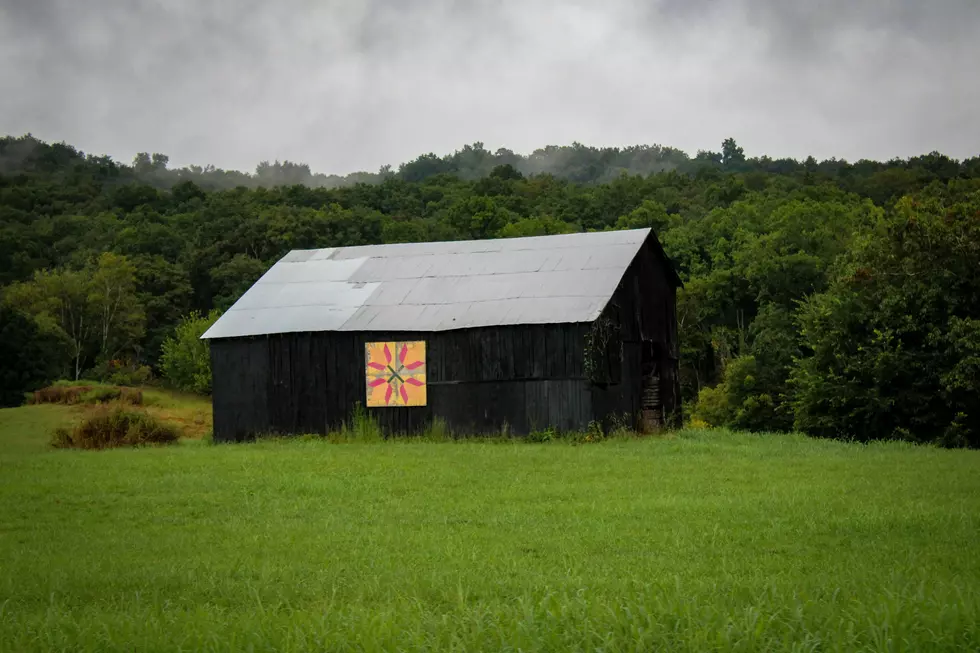
Those Painted Squares on Montana Barns Actually Mean Something
I've always had a soft spot for barn quilts, those big painted squares that turn a plain barn into something you slow down to look at. I used to live on a rural piece of land with a barn of my own, and it bugs me that I never got a barn quilt made for it. I'd still have a piece of that place if I had, even after everything else about it changed. That little regret is what sent me down the rabbit hole of nostalgia, and I thought I'd share with you why barn quilts are starting to pop up on more and more barns in Montana.
How The Barn Quilt Movement Got Its Start
The barn quilt trail as we know it today traces back to 2001 in Adams County, Ohio, when a woman named Donna Sue Groves painted a quilt square on her family's old tobacco barn to honor her mother, a lifelong quilter. According to Appalachian Voices, that single square grew into a 20-stop driving trail across the county within a few years, and the idea spread from there. Today, quilt trails can be found in nearly every state, including right here in Montana.
Meagher County's Trail Turned A Regional Idea Into A Roadside Attraction
One of Montana's best known collections of barn quilts sits along the Meagher County Arts and Cultural Trail, a project approved by the Meagher County Chamber of Commerce in 2017. The trail now features more than 70 barn quilts scattered across communities including White Sulphur Springs, Ringling and Martinsdale, and takes less than two hours to drive from end to end. According to Get Outta The House, local painters got the idea after seeing barn quilts on Pinterest, and many of the squares in the county nod to local history, including the old Milwaukee-St. Paul railroad and the timber industry that once drove the local economy.
Missoula's Quilt Trail Is Helping Save Old Buildings
Barn quilts in Montana aren't just decorative; in Missoula, they are being used as a preservation tool. Founder Kris Crawford and the local history group Threads of Montana History have spent years painting quilt patterns on barns, sheds and other buildings throughout the Target Range and Orchard Homes areas, according to the Missoulian, with new stops added as more property owners sign on. The group's goal is to draw attention to old structures, giving homeowners a reason to keep maintaining them and effectively using the quilt squares to help buy another hundred years of life for barns and outbuildings that might otherwise be torn down.
What The Patterns Actually Represent
Every barn quilt tends to carry its own story. Some are painted as direct replicas of a fabric quilt passed down in a family for generations, while others are original designs created specifically to represent a farm, an industry, or a piece of local history. According to Morning Ag Clips, common symbols include animals, birds, the 4-H clover or a cross, each chosen deliberately by the family or community putting the square up. In Meagher County alone, patterns range from railroad imagery to wildlife designs marking the entrance to working ranches.
Why Montana's Wide Open Roads Are Perfect For Quilt Trails
Montana's scale makes it a particularly good fit for this kind of roadside art. With long stretches between towns and ranches spread far apart, a barn quilt gives drivers something to watch for and gives ranching families a way to put their story on display for anyone passing through. Trail organizers ask quilt owners to hang their squares high enough to be seen from the road, since the whole point is for travelers to spot them without ever leaving public land.

Why I Wish I Had Painted One Of My Own
Knowing all of this now makes my old regret sting a little more. A barn quilt isn't just paint on plywood; it is a marker that says something specific about the people and the place it belongs to. If I ever end up with another barn to my name, it won't stay bare for long.
10 Peaceful Places in Montana That Feel Miles Away From Everything
Gallery Credit: Traci Taylor
Inside the Montana State Capitol: Stunning Photos You Have to See
Gallery Credit: Traci Taylor